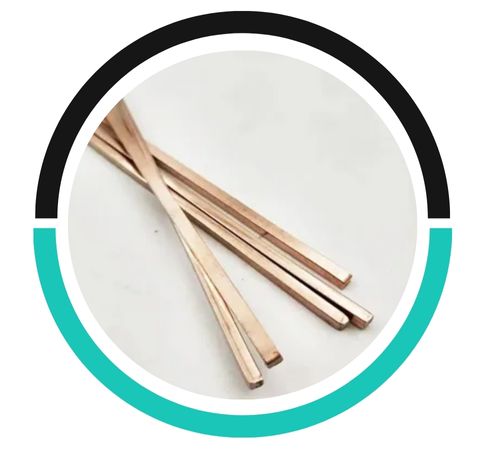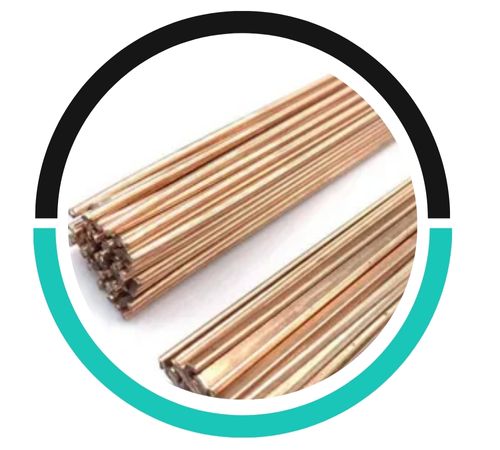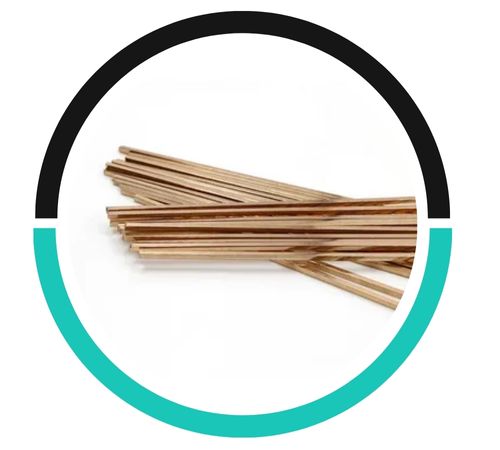
Silver Grade of Brazing Alloy | Nominal Composition % | Melting Range | International Standards | |||||
Ag | Cu | Zn | Cd | Others | °C |  DIN:8513 | AWS:A5.8 | |
| SILVER 67Cd | 67 | 11 | 12 | 10 | – | 635-720 | L-Ag67Cd | – |
| Used for brazing of silver goods made of silver alloys. | ||||||||
| SILVER 50Cd | 50 | 15.5 | 16.5 | 18 | – | 620-640 | L-Ag50Cd | BAg-1a |
| One of the lowest melting point Silver Brazing alloys available. It has excellent flow characteristics. The highest joint strength can be obtained with this alloy. Has better resistance to corrosion in chlorine, sulphur and steam environments. | ||||||||
| SILVER 45Cd | 45 | 15 | 16 | 24 | – | 605-620 | L-Ag45Cd | BAg-1 |
| This has the lowest brazing temperature range of the BAg filler metals. It also flows more freely into narrow clearance capillary joints. Its narrow melting range is suitable for rapid or slow methods of heating. | ||||||||
| SILVER 44Cd | 44 | 27 | 13 | 15 | 1P | 595-660 | – | – |
| Low melting filler metal for brazing electrical contacts and molybdenum or copper-tungsten electrodes. | ||||||||
| SILVER 43Cd | 43 | 16 | 20 | 21 | – | 615-620 | – | – |
| This has the shortest melting range of any silver brazing alloys. This alloy is regarded as the best brazing alloy by manu brazers. It is particularly recommended where a minimum brazing temperature is desirable to preserve the properties of the parent metals. Ideal where joints have a close fitup and will produce neat joints with optimum ductility and strength. | ||||||||
| SILVER 40Cd | 40 | 19 | 21 | 20 | – | 595-630 | L-Ag40Cd | – |
| SILVER 35Cd | 35 | 26 | 21 | 18 | – | 610-700 | L-Ag34Cd | BAg-2 |
| A free flowing general purpose brazing alloy. Its broader melting range is helpful where clearances are wide or are not uniform. Unless heating is rapid, care must be taken that the lower melting constituents do not separate out by liquation. | ||||||||
| SILVER 30Cd | 30 | 28 | 21 | 21 | – | 600-690 | L-Ag30Cd | BAg-2 |
| Similar to Silver 40Cd but more economical. | ||||||||
| SILVER 251Cd | 25 | 30 | 27.5 | 17.5 | – | 605-680 | – | BAg-33 |
| Silver 251, 250 & 20Cd have good fillet forming properties with an ability to bridge wide gaps. Their wide melting range limit their applications. Due to their wide melting range they are somewhat more subject to liquation and may require more care during brazing. Therefore, they are not normally recommended for applications with slow heating rates. | ||||||||
| SILVER 250Cd | 25 | 35 | 26 | 14 | – | 605-745 | – | BAg-27 |
| SILVER 20Cd | 20 | 40 | 25 | 15 | – | 605-765 | L-Ag20Cd | – |
| SILVER 12Cd | 12 | 50 | 31 | 7 | – | 620-825 | L-Ag12Cd | – |
| Economical alloy with wide melting range. Like above, preferred for applications having short heating cycles to avoid liquation. Ideal for bridging wider gaps where work pieces are insensitive to heat. | ||||||||
| SILVER 5Cd | 5 | – | – | 7 | – | 335-392 | – | – |
| Used where alloy having higher melting point and better strength than soft solder is required. | ||||||||